Treadmills & Walking Pads

Smart, compact, powerful. Choose your perfect fit.

How to Choose the Right Treadmill or Walking Pad for Home

Choosing a treadmill or walking pad for home is not about finding the most powerful or feature-packed model. It’s about matching the machine to how you actually plan to use it: walking or running, short daily sessions or structured workouts, limited space or a dedicated room.

This guide walks through the key factors that truly matter in real-life use, so you can make a confident and practical decision.

1. Define Your Primary Goal

Start with how you realistically plan to train. This single decision influences motor power, deck size, storage needs, and budget more than any other factor.

  • Walking: daily steps, light cardio, work-from-home movement.
  • Walking + jogging: occasional runs, general fitness.
  • Running: regular workouts, intervals, endurance training.

Buying a machine designed for more than you need often results in wasted space and money. Buying too little leads to discomfort and early replacement.

2. Walking Pad vs Traditional Treadmill

Walking pads are compact, low-profile machines designed primarily for walking. They are ideal for small apartments and under-desk use.

Traditional treadmills offer larger decks, stronger motors, and higher speed ranges, making them better suited for jogging and running.

  • Walking pad: compact, quiet, easy to store.
  • Treadmill: more powerful, stable, versatile.

3. Motor Power and Performance

Motor power determines how smoothly the treadmill maintains speed under load. For home use, continuous horsepower (CHP) is more important than peak values.

  • Up to 2.0 HP: walking and very light jogging.
  • 2.0–2.5 HP: walking and jogging several times per week.
  • 2.5–3.0+ HP: regular running and interval training.

Choosing slightly more power than you need reduces noise and improves durability.

4. Cushioning and Impact on Joints

Treadmill cushioning system

Cushioning is one of the most underestimated factors when choosing a treadmill. It directly affects joint health, long-term comfort, and how consistently you will be able to train. Poor cushioning increases stress on knees, ankles, and the lower back — especially for heavier users or anyone training several times per week.

Most modern treadmills combine deck flex with rubber or elastomer shock absorbers. Softer systems absorb more impact and feel forgiving during walking, rehabilitation, or recovery workouts. Firmer decks, on the other hand, provide better energy return and stability for faster running and interval training.

  • Softer cushioning: ideal for walking, rehab, and joint protection.
  • Balanced systems: suitable for mixed walking and running routines.
  • Firmer decks: preferred by experienced runners and higher speeds.

6. Speed, Incline, and Training Variety

Treadmill incline training

Speed and incline determine not only how challenging your workouts can be, but also how efficiently you burn calories and build cardiovascular endurance. Incline training is especially valuable because it increases intensity without requiring higher running speeds.

Even a moderate incline significantly raises heart rate and calorie expenditure. For many users, walking at an incline is more joint-friendly than running flat, while still delivering comparable cardiovascular benefits. Incline also simulates outdoor hills, making indoor workouts less monotonous.

  • Walking: 6–8 km/h is sufficient for daily activity and desk use.
  • Running: look for 10–12 mph (16–19 km/h) for progression.
  • Incline: electric incline up to 10–12% adds serious training variety.

7. Size, Folding, and Storage

Treadmill folding and storage

Storage convenience strongly affects how often a treadmill actually gets used. A powerful machine that is difficult to move or store often ends up unused — especially in apartments or shared living spaces.

Before buying, consider not only the treadmill’s footprint during workouts, but also its dimensions when folded or stored. Many users underestimate storage height, thickness, and weight, which later becomes a daily inconvenience.

Walking pads and traditional treadmills approach space-saving very differently. Walking pads focus on ultra-low height and minimal structure, while folding treadmills reduce length but usually remain heavier and taller.

  • Walking pads: typically 5–7 inches (12–18 cm) high, slide under beds or desks.
  • Folding treadmills: folded height often 100–150 cm, need vertical storage space.
  • Non-folding models: require a permanent dedicated area.

8. Console, Controls, and Smart Features

Treadmill console and app control

Control systems affect both safety and comfort. In practice, simplicity is often more valuable than a long list of features. Clear displays and quick-access controls matter far more during real workouts.

For running, physical buttons are safer and easier to use than touchscreens. Walking pads benefit from remote controls, especially when used under a desk. Apps are useful for tracking progress, but less important for real-time control.

  • Physical buttons: safest option for higher speeds.
  • Remote control: essential for under-desk walking.
  • Apps & Bluetooth: useful for motivation and data tracking.
Best Treadmills & Walking Pads by Use Case

Below are our top picks based on different needs and budgets.
Each recommendation focuses on a specific scenario, so you can quickly
find the option that fits your space, goals, and training style.

Best Overall Treadmills

These treadmills offer the best balance of performance, comfort, and reliability
for most home users in the United States.

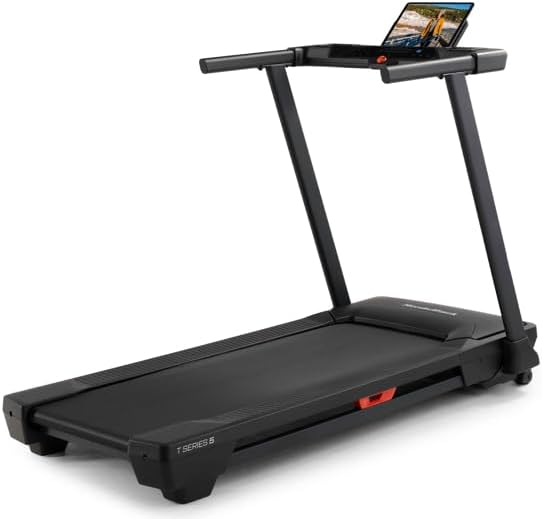
NordicTrack T Series
  • Max speed: 10 mph
  • Incline: up to 10%
  • Cushioning: FlexSelect / KeyFlex
  • Display: 5" LCD
  • Weight capacity: ~300 lbs
  • Footprint: compact, foldable

Sunny Health & Fitness
  • Max speed: 10 mph
  • Incline: auto incline
  • Motor: 2.5 HP brushless (quiet)
  • Connectivity: Bluetooth + SunnyFit app
  • Weight capacity: ~300 lbs
  • Footprint: foldable, fully assembled

Proform Carbon
  • Max speed: 10 mph
  • Incline: up to 12%
  • Cushioning: ProShox™ cushioning
  • Display: 5" LCD + device shelf
  • Weight capacity: ~300 lbs
  • Footprint: foldable, space-saving frame

BEST WALKING PADS UNDER $150

Walking pads under $150 are entry-level treadmills built for walking and light movement. They prioritize compact footprint, basic speed control, and quiet operation, making them suitable for apartments and under-desk use. Advanced features are limited, so reliability and comfort become the main selection criteria.

FUNMILY Walking Pad

  • Max speed: 4 mph
  • Incline: none
  • Motor: 2.5 HP DC motor (quiet)
  • Cushioning: 7-layer belt, silicone shock absorbers
  • Weight capacity: up to 300 lbs
  • Footprint: ultra-compact, 4.5" height, wheels for storage

Ulfario Walking Pad

  • Max speed: up to 4 mph
  • Incline: none
  • Motor: 440 W DC motor
  • Cushioning: 5-layer non-slip belt, shock absorption
  • Weight capacity: up to 264 lbs
  • Footprint: foldable frame, removable handle, wheels for storage

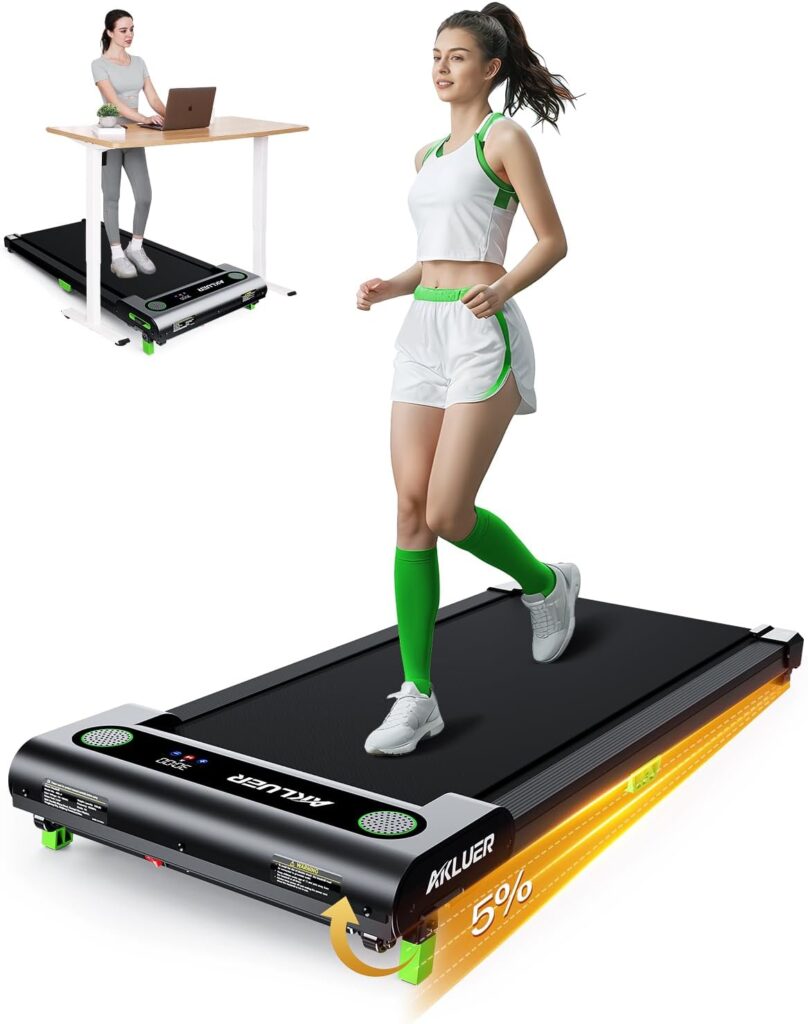
Walking Pad AKLUER

  • Max speed: up to 4 mph
  • Incline: manual incline
  • Motor: 2.5 HP DC motor (quiet)
  • Cushioning: shock-absorbing walking belt
  • Weight capacity: up to 330 lbs
  • Footprint: ultra-slim 3.85" height, compact frame, remote control

Best Under Desk Walking Pads for Home and Office

Under-desk walking pads are built for quiet operation and compact storage, allowing users to stay active while working. They are optimized for low speeds, minimal vibration, and easy control, making them suitable for daily walking during desk work.

WalkingPad Z1

  • Max speed: 4 mph
  • Incline: none
  • Motor: brushless motor (quiet)
  • Cushioning: low-profile deck, smooth walking belt
  • Weight capacity: up to 242 lbs
  • Footprint: foldable in half, ultra-slim 4.1" height, easy under-desk storage

Kassadin Walking Pad with Handle

  • Max speed: up to 7.6 mph
  • Incline: manual incline
  • Motor: 3.0 HP DC motor
  • Cushioning: multi-layer shock-absorbing belt
  • Weight capacity: up to 350 lbs
  • Footprint: compact frame, removable handle, wheels for storage

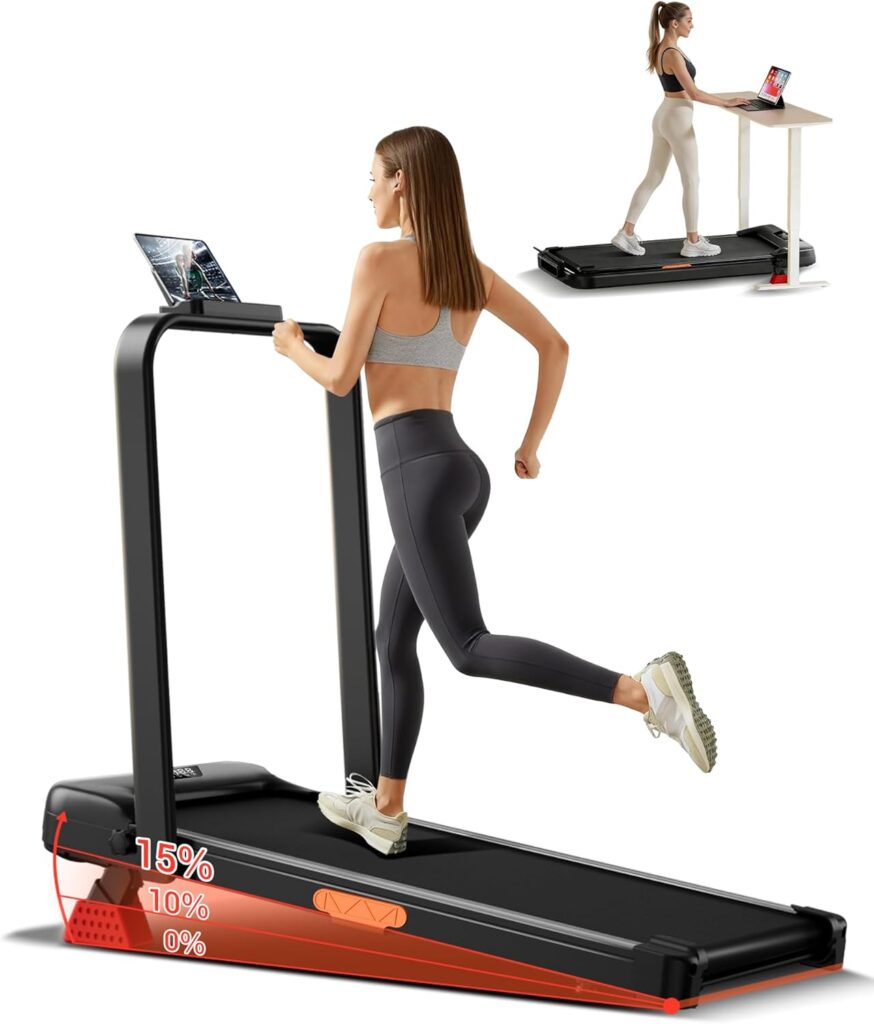
LONTEK Walking Pad with Incline

  • Max speed: 5 mph
  • Incline: manual incline up to 15% (10% base + 15% with riser pad)
  • Motor: 2.5 HP DC motor
  • Cushioning: 6-layer belt, shock absorption system
  • Weight capacity: up to 300 lbs
  • Footprint: foldable, ultra-slim (~4.3" height when folded), wheels for storage

Best Treadmills for Running

These treadmills are designed for regular running, higher speeds, and more demanding workouts. They feature stronger motors, longer running decks, and better stability, making them suitable for interval training and consistent performance-focused use.

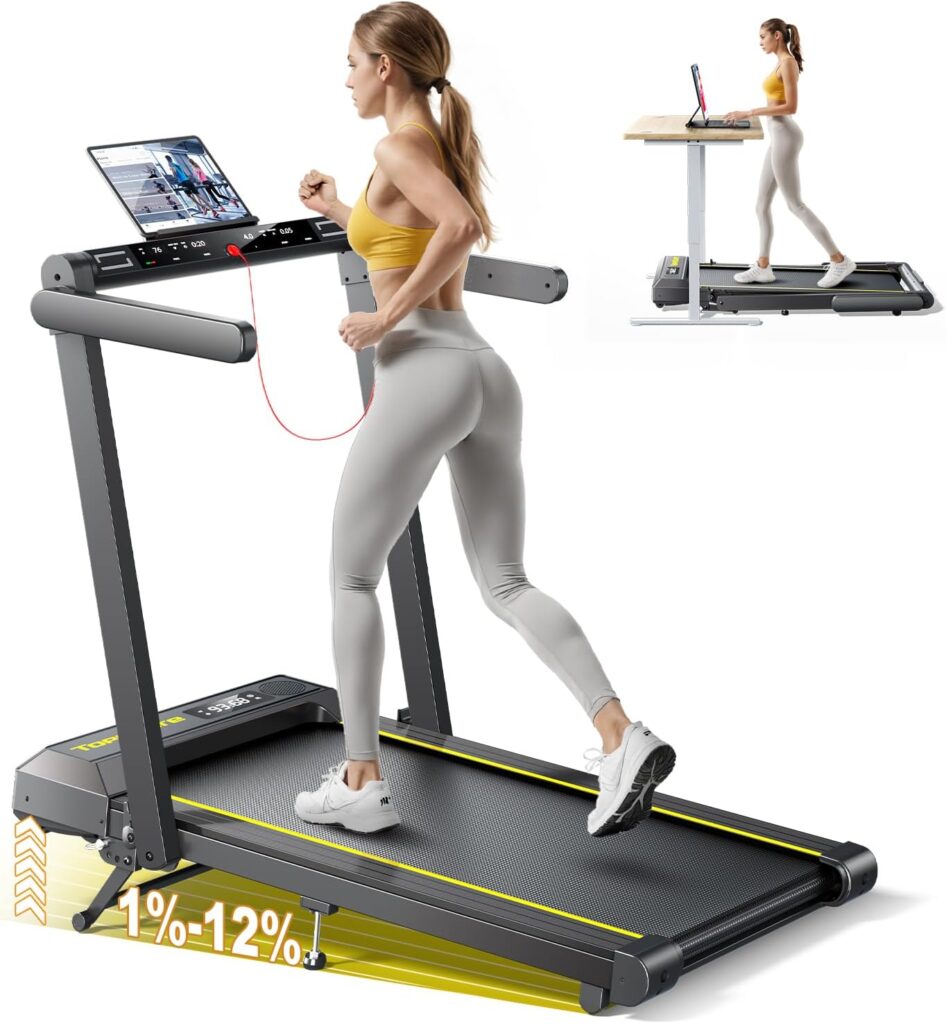
Treadmill TOPUTURE

  • Max speed: up to 10 mph
  • Incline: manual incline (1%, 6%, 12%)
  • Motor: 2.5 HP DC motor (low noise)
  • Cushioning: shock absorption system, 8 cushioning pads
  • Weight capacity: up to 300 lbs
  • Footprint: foldable frame, fully assembled, ~5.1" height

Treadmill HUAGEED

  • Max speed: up to 10 mph
  • Incline: auto incline (15 levels)
  • Motor: 3.0 HP DC motor
  • Cushioning: dual-layer deck, 8+4 shock absorption system
  • Weight capacity: up to 300 lbs
  • Footprint: foldable frame, hydraulic soft-drop, transport wheels

Treadmill Ateedge

  • Max speed: up to 10 mph
  • Incline: manual incline (3 levels)
  • Motor: 3.0 HP DC motor
  • Cushioning: shock-absorbing deck, joint-friendly design
  • Weight capacity: up to 350 lbs
  • Footprint: standard frame, wide running deck, integrated device desk

Best Heavy-Duty Treadmills for Higher Weight Capacity

Heavy-duty treadmills are built for users who need extra stability, durability, and higher weight support. With reinforced frames and more powerful motors, they are designed for frequent use and long-term reliability rather than compact storage.

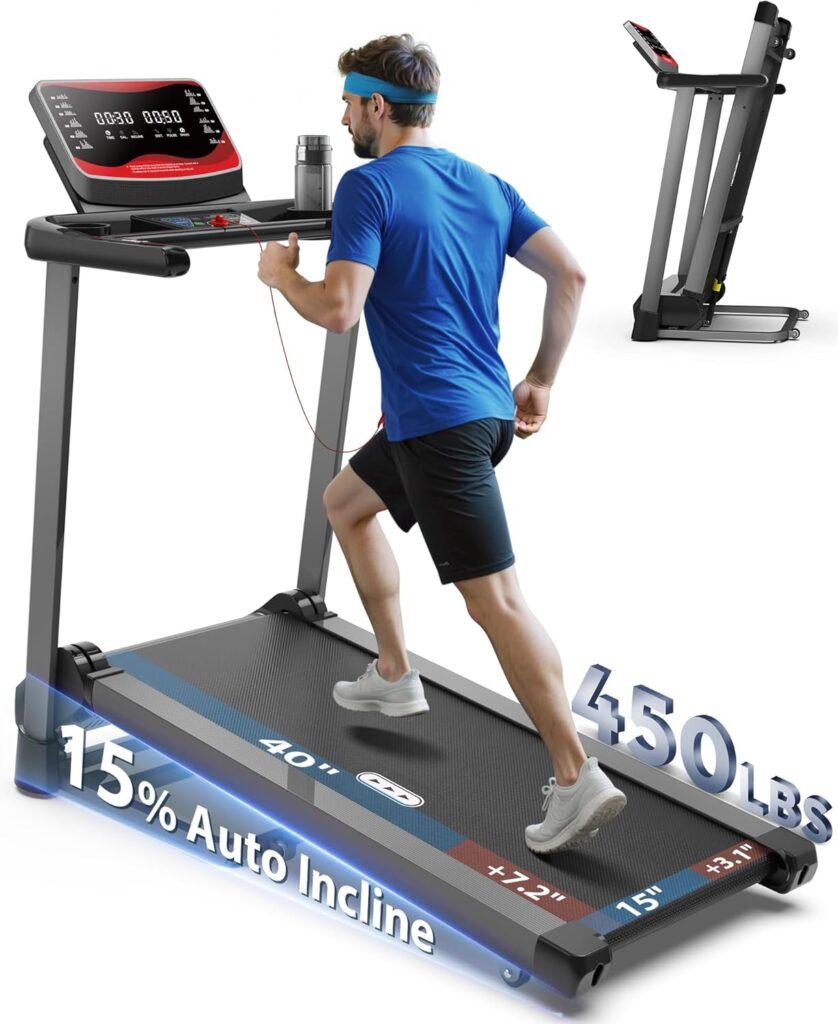
Treadmill CIIHI C

  • Max speed: up to 10 mph
  • Incline: auto incline (15 levels, up to 15%)
  • Motor: high-torque DC motor
  • Cushioning: shock-absorbing running deck
  • Weight capacity: up to 450 lbs
  • Footprint: foldable frame, wide running belt, transport wheels

Walking Pad PACEROCKER

  • Max speed: up to 6 mph
  • Incline: auto incline (9 levels, up to 12%)
  • Motor: 2.5 HP quiet motor
  • Cushioning: shock-absorbing walking deck
  • Weight capacity: up to 450 lbs
  • Footprint: compact, under-bed storage, transport wheels

Walking Pad Rayspace

  • Max speed: up to 6 mph
  • Incline: auto incline (12 levels, up to 15%)
  • Motor: 3.5 HP motor (quiet operation)
  • Cushioning: 7-layer shock absorption system
  • Weight capacity: up to 450 lbs
  • Footprint: compact, foldable, space-saving design

Best Curved Treadmills

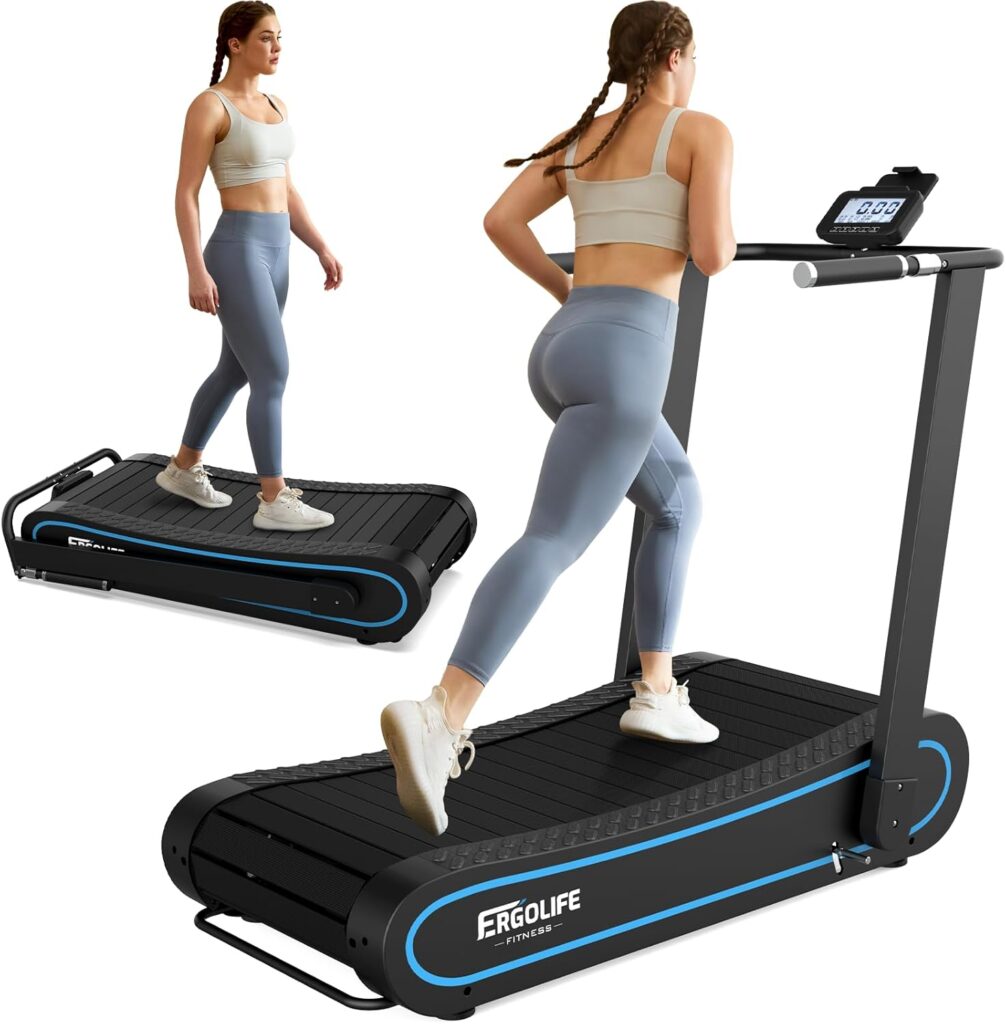
Curved Treadmill ERGOLIFE FITNESS

  • Max speed: user-powered (no speed limit)
  • Incline: fixed curved running surface
  • Drive system: non-motorized, self-propelled
  • Cushioning: curved slat belt, low-impact design
  • Weight capacity: heavy-duty steel frame
  • Footprint: foldable arms, compact storage

Curved Treadmill Rongle QZD-103

  • Max speed: user-powered (self-controlled)
  • Incline: fixed curved running surface
  • Drive system: non-motorized, gravity-driven
  • Cushioning: curved running track, low-impact design
  • Weight capacity: heavy-duty steel frame
  • Footprint: foldable design, compact storage

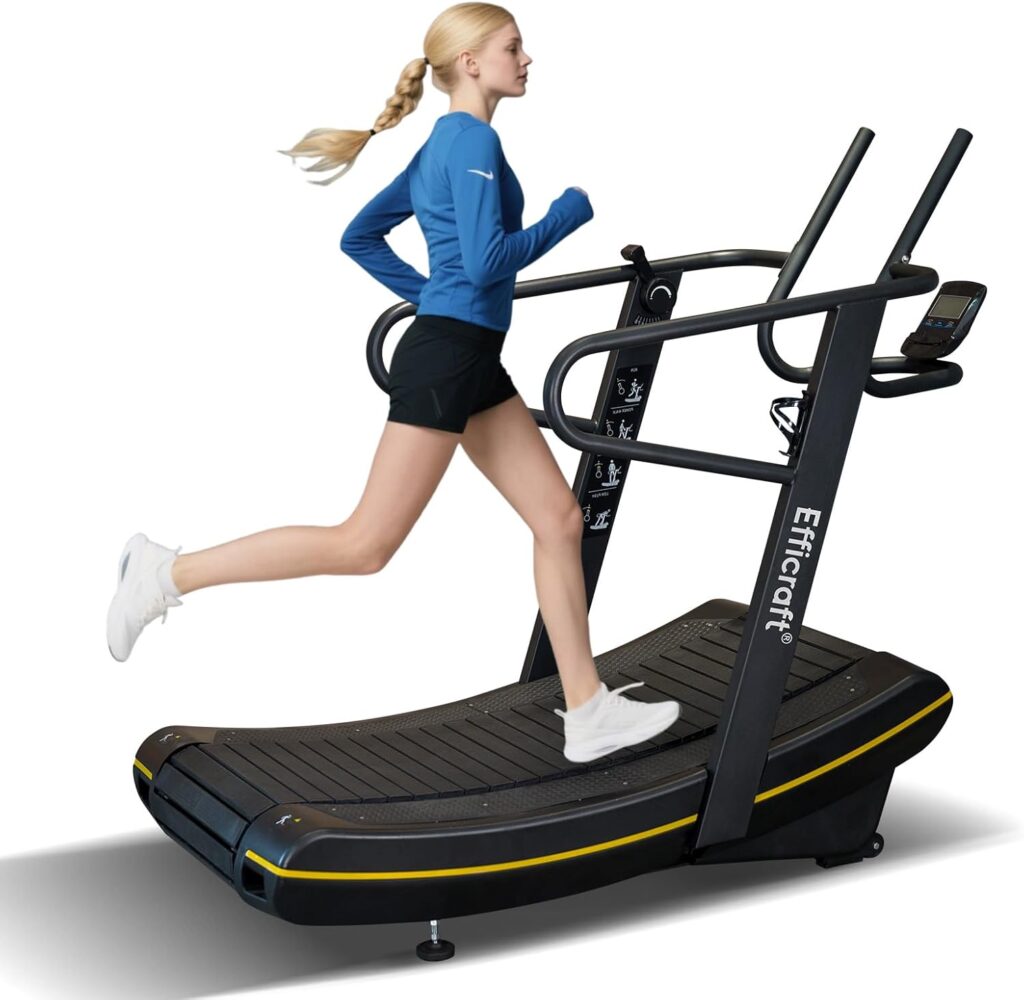
Curved Treadmill Efficraft

  • Max speed: user-powered (no speed limit)
  • Incline: fixed curved running surface
  • Drive system: non-motorized, self-propelled
  • Cushioning: curved rubber slat belt, joint-friendly design
  • Weight capacity: commercial-grade steel frame
  • Footprint: large commercial frame, transport wheels

FAQ

What is the difference between a walking pad and a treadmill?
Walking pads are compact machines designed mainly for walking, often under a desk. Treadmills are larger, more stable, and built for jogging and running at higher speeds.
What top speed do you need for running?
For real running, a treadmill should offer at least 8 mph. Most home runners are more comfortable with 9–10 mph, while advanced users benefit from 11–12 mph.
Are walking pads suitable for office work?
Yes. Walking pads are designed for low-speed, quiet operation and fit easily under standing desks, making them ideal for office and remote work setups.
How important is incline for walking or running?
Incline increases workout intensity and calorie burn. It is optional for office walking but useful for fitness walking, hiking simulations, and running workouts.
What does “heavy-duty treadmill” mean?
Heavy-duty treadmills feature reinforced frames, higher weight capacity (300 lbs and above), and more powerful motors for stability and durability.
Are curved treadmills better than motorized ones?
Curved treadmills are self-powered and excel for HIIT and sprint training, but they require proper technique and are not ideal for beginners or casual walking.
How much space do treadmills and walking pads need?
Walking pads require minimal space and can be stored under a bed or desk. Full treadmills need more floor space, especially for running safety.
Are treadmills safe for joints?
Quality treadmills with proper cushioning can reduce joint impact compared to outdoor running, especially on hard surfaces.
Do treadmills require a lot of maintenance?
Most home treadmills need basic belt cleaning and occasional lubrication. Curved treadmills generally require less maintenance due to the lack of a motor.